Welcome to Rave 2012, the project looks at where education and learning is going to be in both the near and distant future. Using Ravensbourne College's proposed move to the Greenwich peninsula in the next couple of years as a catalyst, I have chosen to use it's position to explore the potential of technology within education.

As well as this main site there is also a personal documentation of my research in the form of Behind Rave 2012 as well as a collection of fellow students opinions and ideas at Students @ Rave 2012.


Thursday, June 29, 2006

R.S.S. Feeds

I have now created feed buttons on the Rave 2012 and the Behind Rave 2012 pages. They are located on the right hand side above the links.

I haven't implemented RSS XML files before so please let me know if there are any issues.

Wednesday, June 14, 2006

Ravensbourne's Digital Domain

After extended conversations with Miles Metcalfe last week I discovered a wide range of digital resources already existing at Ravensbourne. I already knew about the Forums and the Moodle, and the college have just opened their Wiki and their student blogs. I think this is such a great resource for the students, but like I mentioned in my interview with Miles, it's promotion and education will be vital.

Interviews etc.

Just a reminder that I seem to be updating the "Behind Rave 2012" page much more often, so check it out!

Monday, May 29, 2006

The New Building

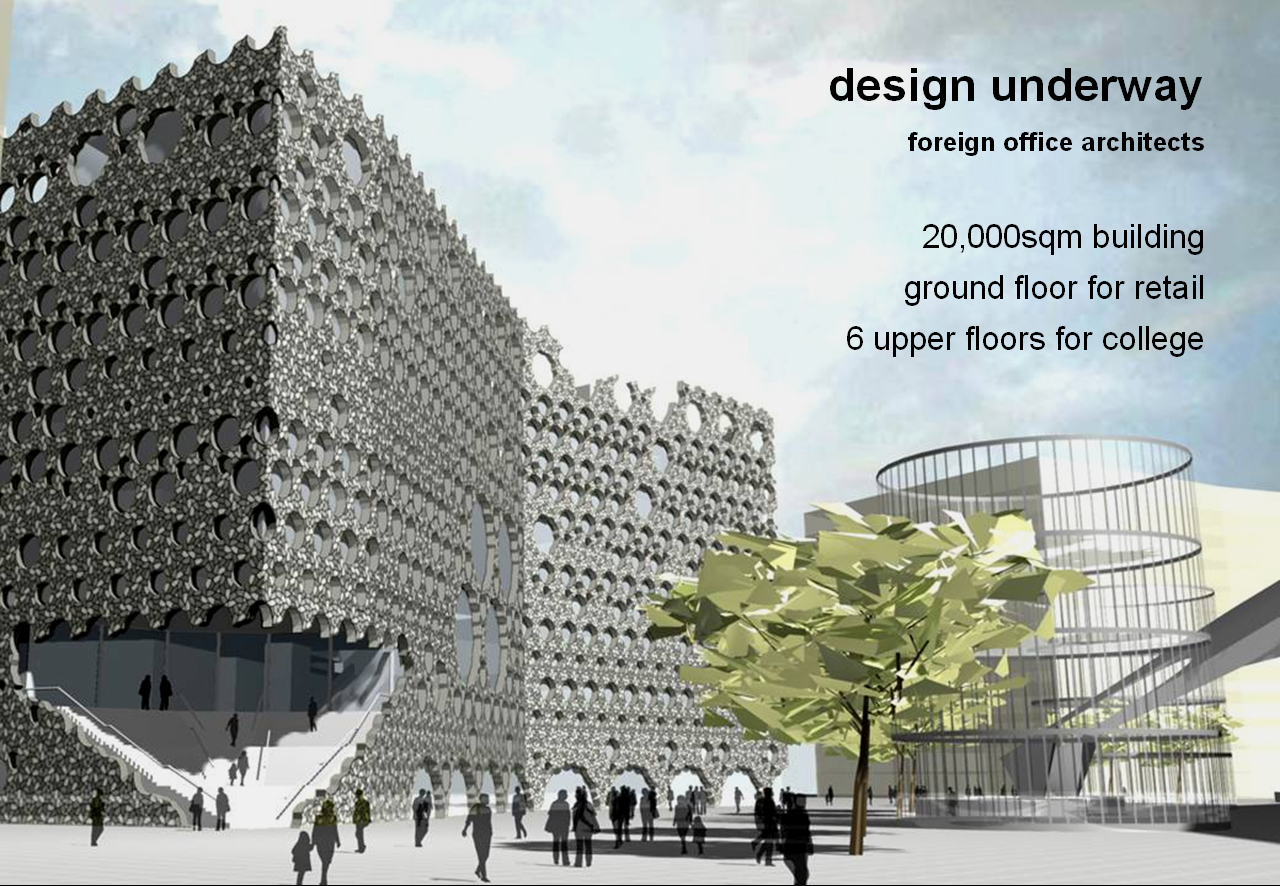
I was lucky enough to receive an email from Fiona Duggan the other day containing this image of the latest plans for the new college building.

Ravensbourne's New Building


As you can see the outside is constructed of tesselating tiles. Fiona told me that the price of this outside shell actually constitutes for half the price of the new building. I naturally thought that these tiles would have been combined with the vast quantities of photovoltaic products that are currently on the market, but it appears otherwise.

Photovoltaic technology uses solar energy to generate heat and electricity, and doesn't even need direct sunlight, it uses the radiation of the light. I found a concise (though poorly designed) PDF that gives a brief but informative introduction to solar energy and PV technology here.

The implementation of these technologies would massively increase the price of the new build but there are 2 points that need to be considered. Primarily, most of the buildings that have implemented this new power option actually feed power back to the national grid, and receive payment for their contribution, and subsequently make back their initial investment in a short period of time. Secondly the image it would project to the rest of the world would be priceless. Showing the rest of the world that these technologies are available and they work.

I think that as a design college, Ravensbourne needs to accept it's responsibility and practice what it's preaching. Look to the future, push the boundaries and challenge everyone elses way of thinking.

Tuesday, May 23, 2006

Virtual Learning continued...

I just found this article and found some elements rather interesting. The research quoted here is taken from 1997 but is still very relevant:

"Schutte observed that the traditional classroom could be sometimes an inhibiting environment for students, and its structure can be pressurising and intimating. Whereas the virtual environment encourages freedom of expression and students are more open to communicate and express opinion and would often thrive in these environments."

"One thing that Schutte pointed out in his report was the fact that ?the virtual students seemed more frustrated?, not from only the technology but from the inability to, ask the teacher, questions in a face-to-face environment. This lack of human face-to-face interaction is what concerns a lot of those critics against virtual learning environments, as they fear students will not develop a deep understanding of their own emotions and this could have a long-term effect on their relationships as future adults in society."

There are two things that come straight to mind when I read the article. One is that Ravensbourne has the perfect opportunity to create a hybrid of the virtual and physical environments achieving the best from both scenarios.
Secondly I was reminded of another section of the interview with Fiona where we talked about the publicising of colleges' e-learning facilities. I previously read that some institutions felt that by making their course content public, they were losing some of their IP as it were and the exclusivity of their status. But Fiona rightly said that the information alone is worth very little and it is the networks and face time with the lecturers that make the college experience.
I want to go further into public learning so it will be covered in a seperate post.

Virtual Learning

One of the key points that was discussed in my conversation with Fiona Duggan last week was the subject of Virtual Learning Environments. From a student's point of view, Ravensbourne's current VLE (also known as Moodle) is substantial and as far as software training goes it has a lot to offer, although on average it is not very well publicised or promoted by the college or the tutors.

I feel that with the time share concept that is being considered on the new site, Ravensbourne must embrace the VLE concept and use it to it's full potential. It has the capability to act as a backbone to the community, that I fear would be far more disjointed than at present as a lot of the students might never necessarily see each other with the studio time layout and allocation.

Fiona did mention that the new site will have a lot of more multi purpose, open use space that the college is lacking at the moment, and I think this will also play a key role in the community structure.

I understand that the lecturers in their current position are stretched to deliver all the demands placed on them by the college's administration, but this timetable will have to be revised on the new site. A base of the weekly lectures, information and learning could be done online, in the form of a video or audio podcast, or as a virtual lecture broadcast to a forum on a regular basis, allowing interaction from the audience as the broadcast took place. This would then allow for students to maximise their time with the lecturer on personal ideas and concepts, without the lecturer having to repeat themselves to the different sections of the class.

By creating this online forum, the students could then start to build on this community, asking each other for opinions and ideas, even if their studio times are different. It is this aspect of the VLE concept that I think the college needs to build on, especially if there are going to be more students to participate.

Tuesday, May 16, 2006

Welcome to Rave 2012

Welcome to the beginning of Rave2012. The project looks at where education and learning is going to be in both the near and distant future. Using Ravensbourne College's proposed move to the Greenwich peninsula in the next couple of years as a catalyst, I have chosen to use it's position to explore the possibilities which lay infront of it.

As a centre of Design within Europe, the college has the chance to make a huge impact on both the future of learning and the future of architectural design, especially within the UK.

The project will look into not only how the physical space will influence it's inhabitants, but how technology, e-learning and virtual learning environments can improve on the way we learn. Also it will look at broader subjects such as public learning and how education can be made available to those who might not normally have the opportunity.

If you have any comments or think of anything you think should be mentioned please feel free to contact me.

You can also keep a track of how the project is going behind the scenes here at 'Behind Rave 2012'.